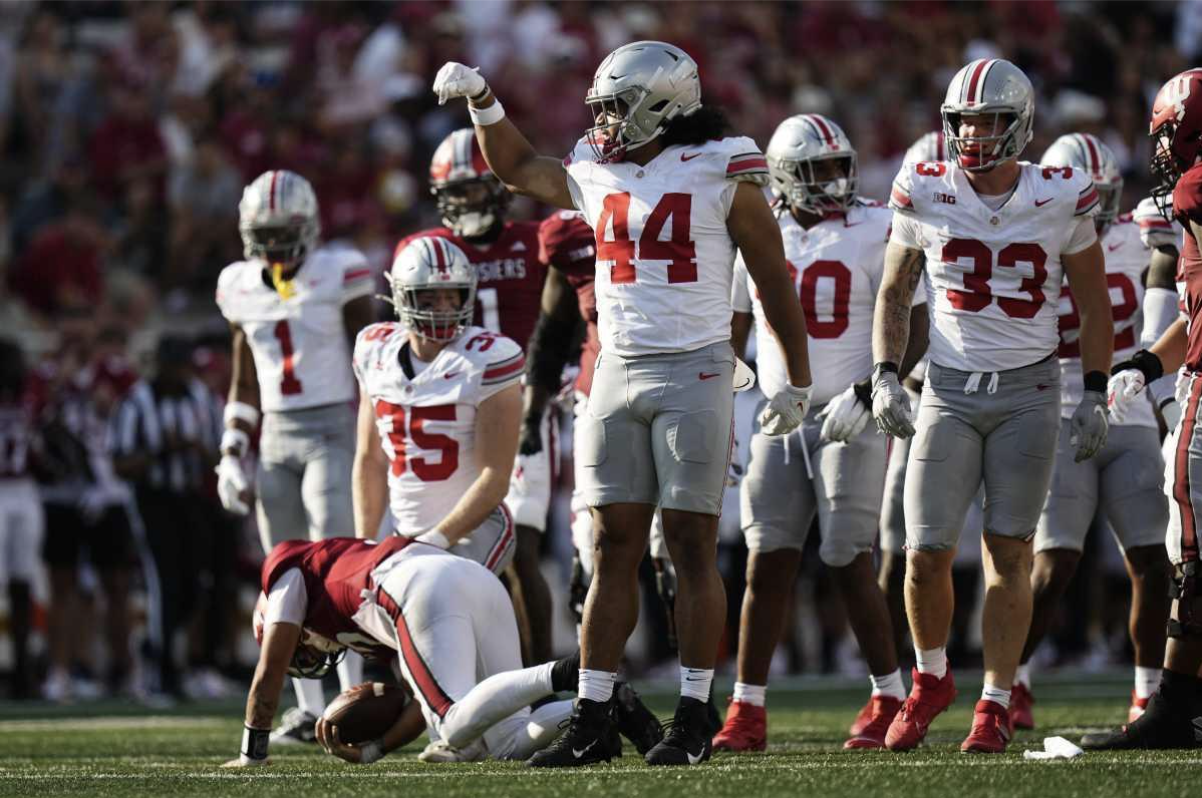
Opinions about a rebuilt defense are easy to argue with. The numbers Ohio State put up in 2025 aren’t.
Under Matt Patricia in his first season as defensive coordinator, the Buckeyes held opponents to just 9.3 points and 219.1 yards per game, the best marks posted by any FBS defense since Alabama allowed 8.2 points and 183.6 yards per game back in 2011. That’s a full step beyond a marginal improvement over a good defense. It’s one of the most statistically dominant seasons college football has seen in over a decade, produced by a unit that had lost its entire starting defensive line the previous spring.
A Real Improvement, Not Just a Repeat
What makes the number more impressive is the context around it. Jim Knowles’ 2024 defense, the one that helped deliver Ohio State’s national championship, allowed 254.6 yards per game and was itself considered elite. Patricia’s first Buckeye defense improved on that mark by more than 35 yards per game while replacing eight starters, all of whom were good enough to be drafted into the NFL. Ohio State also finished first nationally in total defense for the second consecutive season, meaning the level of production didn’t just hold steady through a coaching change. It actually climbed.
The Categories That Do Not Show Up on a Highlight Reel
Scoring and total defense get most of the attention, but Ohio State’s numbers held up just as well in the categories that tend to decide close games. The Buckeyes led the country in red zone defense, turning trips inside the 20 into some of the toughest real estate in college football for opposing offenses to convert. They also ranked inside the top 10 nationally in third-down defense, the kind of situational number that reflects disciplined communication and disguise as much as raw talent.
Those categories matter more than they get credit for. A defense can look dominant statistically while still bleeding points in the red zone or letting drives extend on third down, and neither of those problems showed up in Patricia’s first season running the Buckeye defense.
Consider one additional data point from partway through the season: entering the College Football Playoff, Ohio State’s defense had allowed just 213.5 yards per game and only 10 total touchdowns across the regular season and Big Ten Championship Game, a number that held up against a Texas offense in Week 1 and Indiana’s title-winning group in December alike. The final full-season numbers ticked up slightly after a difficult Cotton Bowl loss to Miami closed out the year, which is itself a reminder that no defense, no matter how dominant, is completely immune to a bad night against a hot opponent. But the fact that the season-long average still finished as the best in the country says plenty about how much cushion Patricia’s unit had built up before that game.
A Number That Recruits Notice Too
Statistical dominance doesn’t just make for a good headline. It shapes how the next class of defensive recruits views the program, and it gives Patricia’s staff a concrete answer any time a prospect or a parent asks what actually changed under the new coordinator. A number like 9.3 points per game travels much further on the recruiting trail than a vague description of scheme philosophy, and it is part of why the coaching staff has continued landing elite defensive commitments even as the roster turns over almost entirely from one year to the next. It also gives Ohio State’s own players a standard to point to internally, a specific number rather than a vague sense of “we were good,” when younger contributors are asked to buy into the process this fall.
Why the Numbers Set an Almost Impossible Bar
The obvious question heading into 2026 is whether any of this is repeatable. Ohio State is replacing seven more starters this offseason, including three first-round draft picks, and doing it against a schedule that includes a Texas offense with a full year of film to study and one of the more dangerous groups of Big Ten quarterbacks the program has faced in years. Even Patricia himself has been careful not to promise a repeat of last year’s numbers, focusing instead on rebuilding the same process that got the 2025 group there in the first place.
History suggests some regression is likely simply because matching a top-two defensive season nationally two years running, with almost entirely different personnel both times, is exceptionally rare in any era of college football. But the 2025 numbers have outgrown nice-story status by now. They’re the new floor of expectation for what a Matt Patricia defense at Ohio State is supposed to look like, a remarkable place for a program to be sitting only one season into a coordinator’s tenure. Whether the 2026 group can even approach those marks will say a great deal about how much of last year’s success was scheme and how much was the specific players running it.